6 Critical Advances in Space Debris Tracking Technology

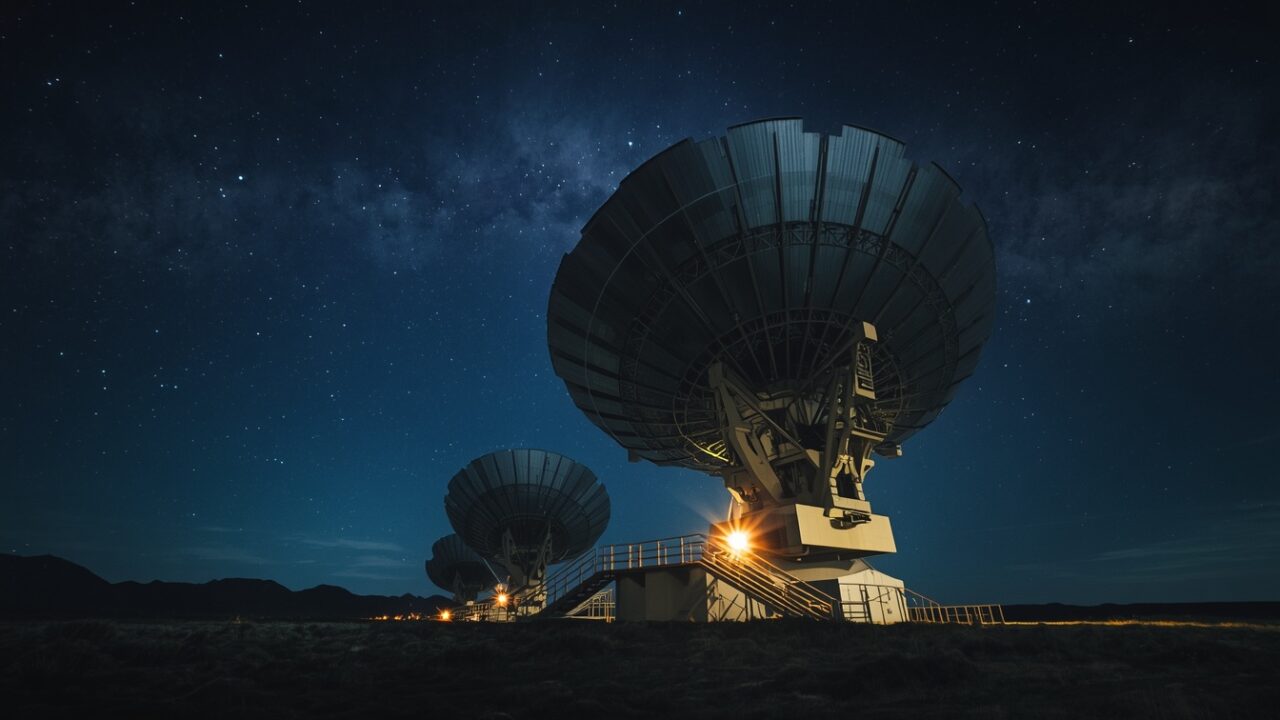
Space Debris Tracking Technology:
Every operational satellite and crewed spacecraft in orbit today depends on a genuinely critical but rarely discussed capability: knowing exactly where dangerous debris fragments are located at any given moment. Space debris tracking technology has evolved into essential infrastructure protecting the entire modern space industry from collision risk.
1. Ground-Based Radar Systems Form the Foundation of Current Tracking Capability
The backbone of current space debris tracking technology involves ground-based radar installations, continuously scanning orbital regions to detect and catalog debris objects large enough for these systems to reliably identify.
2. Optical Telescope Networks Complement Radar-Based Detection
Beyond radar, space debris tracking technology includes dedicated optical telescope networks, particularly valuable for tracking objects in higher orbits where radar detection becomes less effective given the greater distances involved.
3. Tens of Thousands of Objects Are Currently Catalogued and Monitored
Current space debris tracking technology maintains catalogs including tens of thousands of individually tracked objects, ranging from active satellites to defunct spacecraft and fragments from previous collisions or intentional destruction events.
4. Machine Learning Increasingly Assists With Collision Prediction
Reflecting broader technology trends, this technology increasingly incorporates machine learning algorithms, helping process the enormous data volumes involved in predicting potential collision scenarios among the many thousands of tracked objects.
5. Commercial Companies Are Increasingly Contributing Tracking Capability
Beyond traditional government-operated tracking systems, this technology increasingly includes commercial company contributions, with private firms developing their own detection and monitoring capability to serve both government and satellite operator customers.
6. Smaller Debris Fragments Remain Genuinely Difficult to Track Reliably
Despite significant technological advancement, this technology still struggles with smaller debris fragments, since objects below a certain size threshold remain genuinely difficult to reliably detect and track despite still carrying meaningful collision risk given orbital velocities.
Why This Technology Has Become Absolutely Essential Infrastructure
Space debris tracking technology addresses a fundamental and growing risk facing the entire space industry, since the increasing number of active satellites, particularly given large constellation deployments discussed throughout related Starlink analysis, has made reliable collision avoidance capability genuinely mission-critical rather than a secondary consideration.
Without comprehensive tracking capability, satellite operators would face considerably greater uncertainty about collision risk, potentially requiring excessive conservative maneuvering that wastes valuable satellite fuel and operational lifespan simply to avoid debris that better tracking could otherwise identify as non-threatening.

How Many Objects Are Tracked
Space surveillance networks track tens of thousands of objects larger than about 10 centimetres in Earth orbit, including active satellites, dead satellites, rocket bodies and fragments. The European Space Agency estimates there are also more than a million pieces between 1 and 10 centimetres and many millions of smaller fragments.
Even tiny pieces can cause serious damage because they travel at speeds of around 28,000 kilometres per hour in low Earth orbit.
The US Space Fence
The US Space Force’s Space Fence radar on Kwajalein Atoll in the Marshall Islands became operational in 2020. It can detect smaller objects than older radars and track many more at once.
It forms part of the wider Space Surveillance Network of radars and telescopes.
The Kessler Syndrome
In 1978, NASA scientist Donald Kessler warned that collisions could create debris that causes more collisions, leading to a cascade. This idea became known as the Kessler syndrome.
Tracking debris is essential to prevent such a cascade.
The 2009 Satellite Collision
In February 2009, an active Iridium communications satellite collided with a defunct Russian Cosmos satellite over Siberia. It was the first accidental collision between two intact satellites.
The crash created thousands of new debris fragments.
Anti-Satellite Tests
China destroyed its Fengyun-1C weather satellite with a missile in 2007, creating thousands of trackable fragments. Russia destroyed Cosmos 1408 in 2021, creating more than 1,500 pieces.
These tests added significant debris to orbit.
LeoLabs’ Commercial Radars
LeoLabs operates radars in several countries, including New Zealand, Costa Rica and the United States, selling tracking data to satellite operators.
Commercial tracking adds coverage and detail.
ESA’s Space Debris Office
ESA’s Space Debris Office in Darmstadt, Germany, monitors the debris environment and publishes annual reports.
It helps European operators avoid collisions.
TraCSS: Civil Space Traffic
The US Office of Space Commerce is developing TraCSS, a system to provide collision warnings to civilian and commercial operators.
It aims to shift this role from the military to a civil agency.
ISS Debris Manoeuvres
The ISS has performed dozens of manoeuvres to avoid debris since 1999. Sometimes crews shelter in their spacecraft when warnings come too late.
Accurate tracking protects astronauts’ lives.
Optical and Laser Tracking
Telescopes track objects in higher orbits, while laser ranging stations measure distances precisely.
Combining methods improves accuracy.
Predicting Conjunctions
Tracking systems calculate when two objects might pass dangerously close, known as conjunctions. Operators receive warnings and decide whether to move their satellites. Improving prediction accuracy reduces unnecessary manoeuvres, which waste fuel, while ensuring real threats are not missed.
Machine learning tools help sort through huge numbers of potential conjunctions to find the most serious risks.
The Small Debris Problem
Pieces smaller than about a centimetre are too small to track reliably but can still damage spacecraft. Shielding and careful design help satellites and stations survive such impacts.
Space-Based Surveillance
Satellites can also track debris from orbit, avoiding weather and daylight limits that affect ground telescopes. Canada’s Sapphire satellite and the US Space-Based Space Surveillance system have monitored objects in higher orbits. Space-based sensors complement ground radars and telescopes, filling coverage gaps and improving the overall catalogue of objects around Earth.
Why Accuracy Matters
More accurate tracking means fewer false alarms and better warnings when real risks appear. Operators save fuel by avoiding unnecessary manoeuvres, while real threats get the attention they deserve. As orbits grow busier, precise tracking becomes one of the most valuable services in the space economy.
Sharing Data Internationally
The US Space Force shares tracking data with operators worldwide through agreements and the Space-Track website. Many countries and companies rely on this data, and international cooperation improves safety for everyone in orbit, regardless of which nation owns a satellite.
How This Technology Continues Advancing to Address Growing Orbital Congestion
As orbital congestion continues increasing alongside expanding satellite constellations discussed throughout related industry analysis, this technology must continue advancing in both detection sensitivity and data processing capability, ensuring the system can handle an increasingly complex tracking challenge involving ever-more objects.
This continued technological evolution reflects genuine industry recognition that reliable debris tracking represents foundational infrastructure supporting the entire modern space economy, making continued investment in this capability essential for sustainable long-term space industry growth rather than optional supplementary technology.
Keep exploring with our guides to orbital debris tracking radar technology, satellite constellation collision avoidance systems and active space debris removal missions. For official information, visit ESA’s space debris hub.
Frequently Asked Questions
How is space debris tracked?
Primarily through ground-based radar systems complemented by optical telescope networks.
How many objects are currently tracked?
Tens of thousands of objects are catalogued and monitored, ranging from satellites to debris fragments.
Does AI help with debris tracking?
Yes, machine learning increasingly assists with processing data and predicting potential collision scenarios.
Are private companies involved in debris tracking?
Yes, commercial companies increasingly contribute their own detection and monitoring capability.
Can all debris be reliably tracked?
No, smaller fragments remain genuinely difficult to detect despite still carrying meaningful collision risk.