Space industry apprenticeship programs: 6 Best Proven Tips


Space industry apprenticeship programs:
Not every valuable space industry career requires a traditional four-year engineering degree, creating genuine opportunity for alternative training pathways that address the industry’s substantial technician and skilled trade workforce needs. Space industry apprenticeship vocational training programs increasingly provide these important alternative career entry points.
1. Manufacturing Technician Roles Increasingly Offer Structured Apprenticeship Pathways
Reflecting genuine workforce development priorities, space industry apprenticeship vocational training programs increasingly include structured manufacturing technician pathways, providing hands-on training directly relevant to the satellite and rocket production roles discussed throughout related job market analysis.
2. Community College Partnerships Provide Accessible Entry Points Into Space Industry Careers
Space industry apprenticeship vocational training programs frequently involve community college partnerships, offering genuinely accessible entry points into space industry careers without requiring the time and financial investment traditional four-year engineering degrees demand.
3. Companies Increasingly Sponsor Direct Apprenticeship Programs Rather Than Depending Entirely on External Training
Reflecting genuine talent pipeline investment, these programs increasingly include company-sponsored direct apprenticeship arrangements, allowing companies to train workers specifically for their own particular manufacturing and technical processes.
4. These Programs Help Address Genuine Skilled Trade Workforce Shortages
These programs directly address genuine skilled trade workforce shortages discussed throughout related supply chain analysis, providing structured pathways for developing the machinists, technicians, and other specialized workers manufacturing scale-up genuinely requires.
5. Military Veteran Transition Programs Often Connect Directly to Space Industry Apprenticeships
Reflecting valuable transferable skills, these programs frequently include dedicated military veteran transition pathways, recognizing that technical skills and discipline developed during military service often translate genuinely well to space industry technical roles.
6. Successful Program Graduates Often Achieve Meaningful Career Advancement Over Time
These programs generally demonstrate genuine career advancement potential for successful graduates, with many technicians eventually progressing into more senior technical or even engineering roles through combined work experience and continued education.
Why These Alternative Pathways Provide Essential Workforce Development Value
These programs provide essential workforce development value precisely because traditional four-year engineering degree pathways alone cannot supply sufficient qualified workers to meet the industry’s substantial and diverse hiring demand discussed throughout related job market growth analysis.
This diversified workforce development approach reflects sound talent pipeline strategy, recognizing that different roles genuinely require different preparation pathways, with hands-on technical apprenticeship training often proving more directly relevant for manufacturing and technician positions than traditional academic engineering coursework alone.
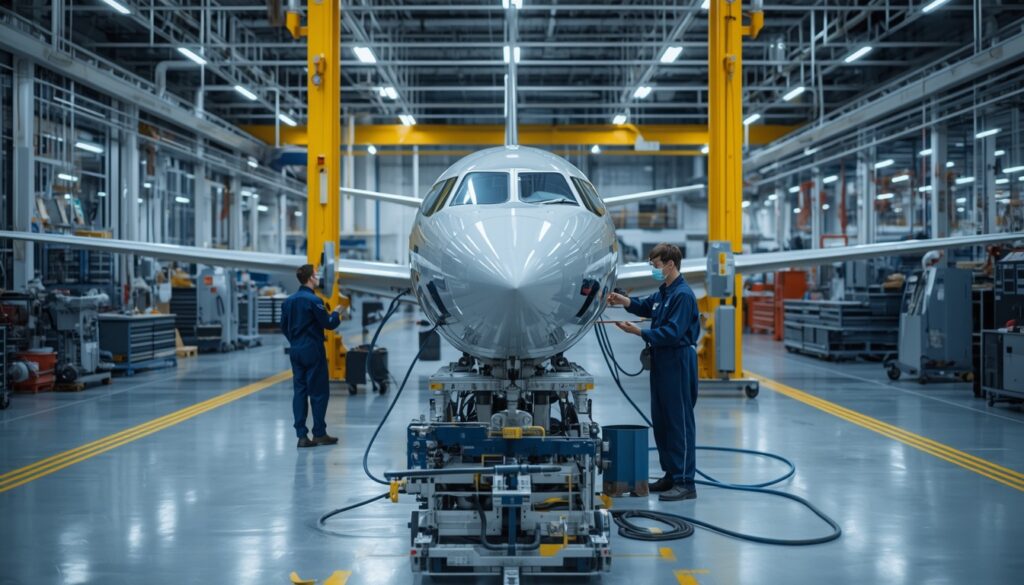
Why Technicians Are in Demand
Rockets and satellites are built by skilled technicians as well as engineers. Workers who can solder circuit boards to space standards, assemble wiring harnesses, machine precision parts and weld fuel tanks are in high demand as production rates rise.
Many of these roles do not require a four-year degree, making apprenticeships and vocational training a practical pathway into the industry.
Registered Apprenticeships in the US
In the United States, companies can create registered apprenticeship programs recognised by the Department of Labor. Apprentices earn wages while learning on the job and taking classes.
Large aerospace firms such as Northrop Grumman and Lockheed Martin run apprenticeship programs.
Community College Partnerships
Community colleges near space hubs, such as those on Florida’s Space Coast and in Southern California, offer aerospace technician courses developed with local companies.
Students gain skills employers need and often move directly into jobs.
Europe’s Apprenticeship Tradition
Germany’s dual vocational system combines classroom learning with workplace training and is widely used in aerospace. Airbus runs apprenticeships in several European countries.
The UK has developed a space engineering technician apprenticeship standard.
Space-Grade Workmanship Standards
Technicians learn industry standards for soldering and assembly, including space-specific requirements. Certification shows employers that workers can meet strict quality rules.
Small errors can cause mission failures, so training is rigorous.
Transferring From Aviation
Aircraft mechanics and technicians often move into space roles. Their experience with safety procedures and precision work transfers well.
Companies value this background.
Space Workforce 2030
In 2022, the Space Foundation and The Aerospace Corporation launched Space Workforce 2030, a pledge by companies to increase diversity and expand pathways into space careers.
Participating companies share data and best practices.
NASA Internships
NASA offers internships for students at many levels, including community college students.
Internships give hands-on experience at NASA centres.
Career Growth
Technicians can advance to supervisory or engineering roles with experience and further education.
Many companies support continued learning.
Global Opportunities
Countries like India, the UK and Australia are building training programs for their growing space industries.
Vocational pathways help widen participation.
Pay and Career Prospects
Apprentices earn wages while training, making apprenticeships attractive to people who cannot afford long degree programmes. After completing training, technicians often earn solid salaries, and many advance to lead technician, inspector or supervisor roles. Some later pursue engineering degrees with employer support, building on their practical experience.
Inclusion Benefits
Apprenticeships help widen access to space careers for people from diverse backgrounds who may not follow traditional university paths.
Employer Commitment
Companies that invest in apprenticeships often see stronger loyalty from workers they train.
Future Demand
Demand for skilled technicians is expected to keep rising as production grows.
Global Examples
Countries such as Germany show how strong apprenticeship systems support advanced manufacturing.
Certification
Certifications prove apprentice skills.
Hands-On Learning in Real Factories
Apprentices usually spend most of their time on the factory floor, working alongside experienced technicians on real hardware. They learn to read engineering drawings, follow detailed procedures and document every step, since traceability is essential in aerospace manufacturing. Classroom sessions cover the underlying theory, such as electronics, materials and safety.
By the end of an apprenticeship, workers are ready to take on skilled roles and often continue learning toward advanced certifications.
Pathways for Veterans
Military veterans often have technical skills from maintaining aircraft, electronics and vehicles. Space companies and training programmes offer pathways that recognise this experience, helping veterans move quickly into aerospace jobs.
Addressing Skills Shortages
Industry groups warn that shortages of skilled technicians could slow production. Expanding apprenticeships is one of the most direct ways to build the workforce.
How These Programs Continue Expanding Alongside Broader Space Industry Manufacturing Growth
As space industry manufacturing continues scaling to meet growing production demands discussed throughout related supply chain analysis, these programs will likely continue expanding, providing increasingly important structured pathways addressing the industry’s substantial ongoing skilled workforce needs.
This continued program expansion reflects genuine industry recognition that sustainable long-term manufacturing capacity growth requires diverse, accessible workforce development pathways beyond traditional academic routes alone, ensuring sufficient qualified workers continue entering the industry to support its continued ambitious growth trajectory.
Keep exploring with our guides to satellite manufacturing workforce training, space industry job market growth and space industry talent acquisition from aviation tech sectors. For official information, visit NASA’s official site.
Frequently Asked Questions
Do space industry careers require a four-year degree?
Not always, apprenticeship and vocational training programs offer alternative career pathways.
Are community colleges involved in space industry training?
Yes, frequent partnerships provide accessible entry points into space industry careers.
Do companies sponsor their own training programs?
Yes, increasingly, allowing companies to train workers specifically for their own manufacturing processes.
Are military veterans a good fit for these programs?
Yes, technical skills and discipline from military service often translate well to space industry roles.
Can apprenticeship graduates advance their careers?
Yes, many technicians eventually progress into more senior technical or engineering roles over time.