Space Industry Cargo Insurance Liability Law: 6 Best Shocking Facts

Space Industry Cargo Insurance Liability Law:
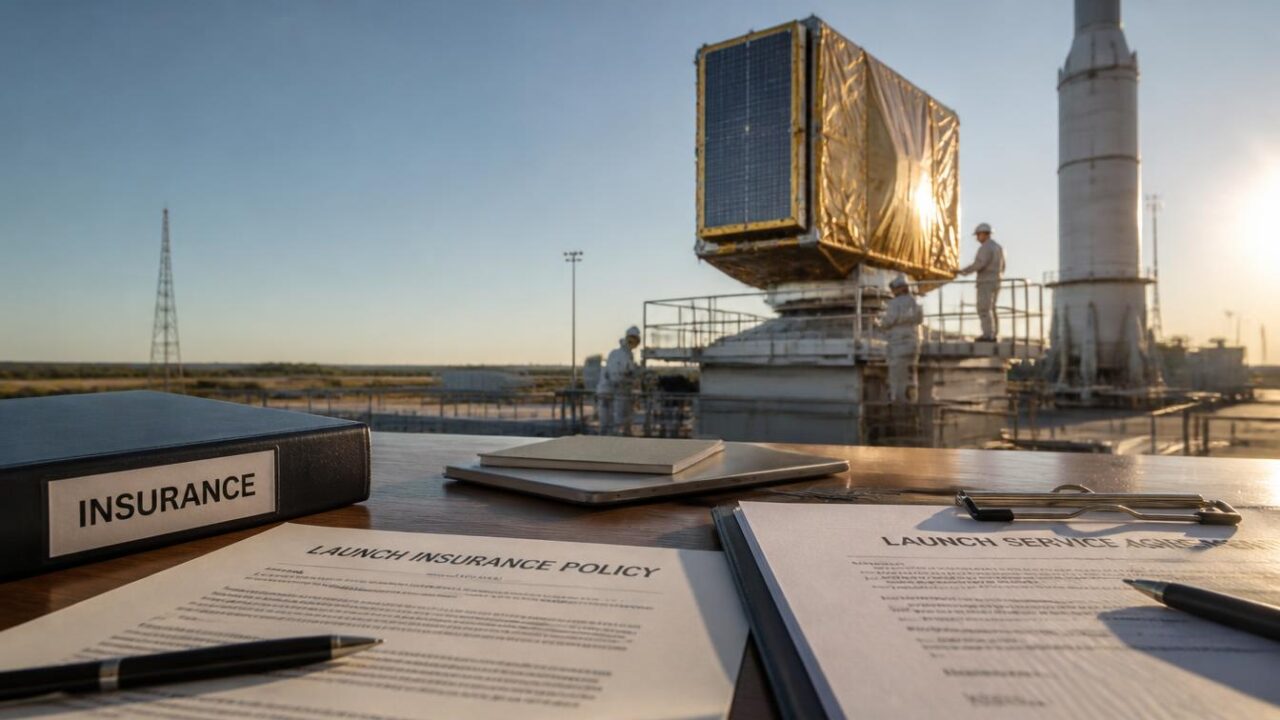
When a satellite or scientific payload suffers damage or complete loss during its journey to orbit, determining exactly who bears financial responsibility involves navigating genuinely complex legal frameworks. Space industry cargo insurance liability law establishes the rules governing these financial relationships between launch providers, payload owners, and insurance companies.
1. Launch Contracts Typically Specify Detailed Liability Allocation Between Parties
A foundational element within this law involves launch contract provisions, which typically specify detailed liability allocation between the launch provider and payload customer for various potential failure scenarios occurring at different mission phases.
2. International Treaties Establish Baseline Liability Principles for Space Activities
Space industry cargo insurance liability law operates partly within international treaty frameworks, which establish baseline liability principles for space activities generally, though these treaties leave considerable specific detail to individual national laws and contractual arrangements.
3. Cross-Waiver Provisions Are Common in Commercial Launch Agreements
Reflecting standard industry practice, this law typically incorporates cross-waiver provisions within commercial launch agreements, where parties agree not to pursue certain claims against each other regardless of fault, simplifying otherwise complex liability determination.
4. Third-Party Liability Coverage Addresses Potential Ground and Aviation Impact Risks
Beyond payload-specific coverage, this law includes third-party liability considerations, addressing potential launch failure scenarios that could theoretically affect people or property on the ground or in aviation traffic near launch and reentry corridors.
5. Government Indemnification Sometimes Supplements Private Insurance Coverage
This law in some countries includes government indemnification provisions, providing additional liability coverage beyond what private commercial insurance alone offers, particularly for catastrophic scenarios exceeding standard policy limits.
6. Dispute Resolution Mechanisms Vary Considerably Based on Contract Jurisdiction Choices
Given the genuinely international nature of modern space commerce, space industry cargo insurance liability law disputes often involve careful attention to contractual jurisdiction and dispute resolution mechanism choices, since different legal systems can produce meaningfully different outcomes for similar underlying disputes.
Why This Legal Framework Provides Essential Business Certainty for Space Commerce
This law provides essential business certainty that makes commercial space activity genuinely practical, since companies and their insurers need clear, predictable liability frameworks before committing the substantial capital investment space missions require.
This certainty function explains why careful legal structuring receives serious attention throughout space industry contract negotiation, recognizing that ambiguous or unfavorable liability terms could expose companies to genuinely unacceptable financial risk given the substantial values typically involved in space mission payloads and launch services.
How This Legal Framework Continues Evolving Alongside Growing Commercial Space Activity
As commercial space activity continues expanding into genuinely novel categories discussed throughout related industry analysis, including in-orbit servicing and manufacturing applications, this law will likely require continued adaptation addressing liability questions these newer business models raise beyond traditional launch and satellite deployment scenarios.
This continued legal evolution reflects the broader pattern of legal frameworks needing sustained development alongside advancing commercial practice, suggesting cargo insurance liability law will likely remain an actively developing area of space commercial law rather than reaching any permanently settled framework.
The Treaty Foundation
International space law rests on the 1967 Outer Space Treaty, which makes countries responsible for space activities carried out by their citizens and companies. The 1972 Liability Convention adds that a launching state is absolutely liable for damage its space objects cause on Earth or to aircraft, and liable based on fault for damage in space.
Because states carry this responsibility, governments require companies to hold insurance and follow licensing rules.
US Commercial Launch Law
The US Commercial Space Launch Act of 1984, amended in 1988 and later, sets the framework for licensing commercial launches. It requires companies to buy third-party liability insurance based on a calculated maximum probable loss.
The FAA’s Office of Commercial Space Transportation handles licensing.
Maximum Probable Loss
The FAA calculates the maximum probable loss for each launch, capped at 500 million dollars for third-party damage and 100 million dollars for damage to government property.
Companies must buy insurance up to these amounts.
Government Indemnification
Above the insured amount, the US government may pay claims up to a limit set in law, originally 1.5 billion dollars in 1988 terms and adjusted for inflation.
This protects companies from catastrophic claims.
Cross-Waivers of Liability
US rules require launch participants, including the launch company, customers and contractors, to sign reciprocal waivers agreeing not to sue each other for damage.
Each party covers its own losses.
Cargo Insurance for Satellites
Satellite owners often buy insurance covering launch failure and early in-orbit problems. These policies protect the value of the payload.
Premiums depend on the rocket’s track record.
Relaunch Guarantees
Some launch providers offer free relaunches if a mission fails, instead of or alongside insurance.
This gives customers another form of protection.
ISS Cross-Waivers
The ISS Intergovernmental Agreement includes cross-waivers among partner countries, simplifying liability for activities on the station.
Commercial users of the ISS agree to similar terms.
Registration Convention
The 1975 Registration Convention requires countries to register objects they launch with the United Nations. Registration helps identify responsibility.
It supports liability claims if accidents occur.
Claims Rarely Reach Courts
Most space liability disputes are settled through negotiation or insurance rather than lawsuits. Cross-waivers and clear contracts reduce conflicts between launch participants, keeping legal battles rare.
International Harmonisation
Different national laws create complexity for international missions, prompting calls for harmonised rules.
Insurance Market Role
Insurers play a central role in space liability, paying claims and influencing safety practices through pricing and policy conditions.
Clarity
Clear contracts prevent disputes.
Liability for Space Tourism
Commercial human spaceflight adds new liability questions. In the United States, passengers must sign informed consent documents acknowledging risks, and launch companies must carry insurance covering third parties. State laws in places like Florida and New Mexico provide some protection to operators from lawsuits by participants who accepted the risks.
These rules aim to allow the industry to grow while ensuring passengers understand what they are signing up for.
Contracts Between Companies
Launch contracts carefully allocate risks between launch providers, satellite owners and manufacturers. Clauses cover delays, failures and damage.
Evolving Law
As activities expand to the Moon and beyond, lawyers expect new questions about liability, requiring updated national laws and agreements.
Lunar Activities
As companies land on the Moon, questions arise about liability for damage between lunar missions. Existing treaties apply, but details remain unclear.
Legal Expertise
Space lawyers help companies navigate these complex liability rules.
Keep exploring with our guides to space debris liability legal framework, space industry insurance claims and losses and rocket launch insurance claims processing. For official information, visit NASA’s official site.
Frequently Asked Questions
Who is liable if a payload is damaged during launch?
Launch contracts typically specify detailed liability allocation between the launch provider and payload customer.
Do international treaties govern space liability?
Yes, they establish baseline principles, though considerable detail is left to national laws and contracts.
What is a cross-waiver provision?
An agreement where parties agree not to pursue certain claims against each other regardless of fault.
Does insurance cover potential ground damage from launch failures?
Yes, third-party liability coverage addresses potential impact risks to people or property near launch corridors.
Do governments provide additional liability coverage?
Sometimes, government indemnification supplements private insurance for catastrophic scenarios exceeding standard limits.