6 Trends Driving Space Industry Patent Litigation in 2026

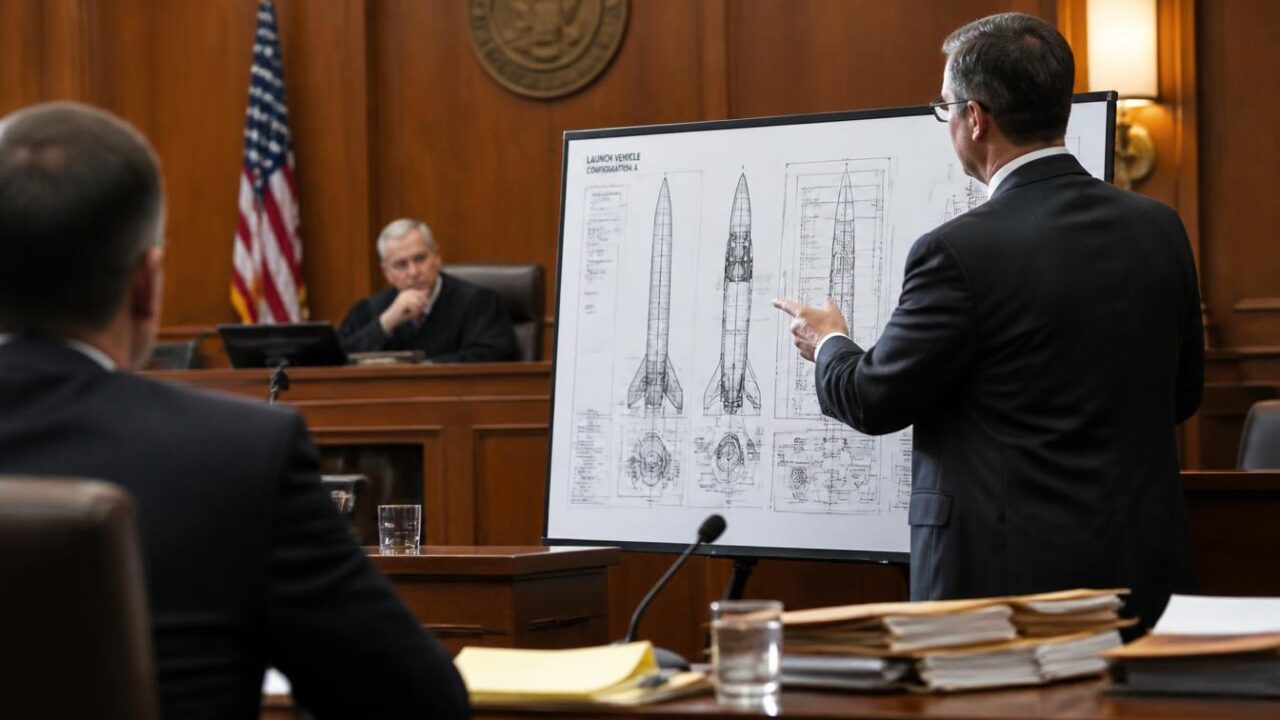
Space Industry Patent Litigation:
As commercial space companies have grown from small, specialized teams into large organizations competing directly for the same government contracts and commercial customers, patent litigation has become an increasingly common feature of the industry landscape, mirroring how intellectual property disputes intensify in other technology sectors once multiple well-funded competitors begin pursuing overlapping innovation areas. Understanding space industry patent litigation helps explain why this topic matters so much right now.
Common Categories of Space Patent Disputes
Litigation has clustered around several recurring technology areas, including reusable rocket landing systems, satellite deployment mechanisms, propulsion system designs, and increasingly, software and data processing methods used in satellite operations and ground systems. These disputes often involve claims that a competitor’s engineering approach, despite being independently developed, infringes on previously filed and granted patents covering similar functional outcomes.
The Challenge of Patenting Aerospace Engineering
Aerospace engineering solutions often converge on similar approaches due to the constraints of physics rather than deliberate copying, which creates genuine difficulty in patent litigation when determining whether a competitor’s similar solution represents independent engineering convergence or actual infringement of protected intellectual property, a distinction that has proven difficult for courts without specialized aerospace technical expertise to evaluate.
How Litigation Affects Smaller Companies
Well-funded space companies with substantial patent portfolios can use litigation, or the credible threat of litigation, as a competitive tool against smaller rivals who may lack the financial resources to mount an extended legal defense, even when the smaller company’s underlying technology claims have genuine merit, creating a dynamic where litigation outcomes are sometimes influenced as much by financial resources as by the technical merits of the underlying patent claims.
Cross-Licensing as a Resolution Strategy
Rather than pursuing lengthy litigation to conclusion, many space industry patent disputes are ultimately resolved through negotiated cross-licensing agreements, where competing companies grant each other rights to use specific patented technologies, an approach that allows both parties to continue operating without the ongoing legal expense and business uncertainty that prolonged litigation creates.
International Patent Enforcement Complications
Space companies operating and launching from multiple countries face additional complexity since patent rights and enforcement mechanisms vary considerably between jurisdictions, meaning a company might successfully defend a patent claim in one country while facing an entirely different outcome pursuing the same claim in another country’s court system, complicating global litigation strategy for companies with international operations.
What Gets Fought Over
Patent disputes in the space industry often involve communication technology such as modems, phased array antennas and signal processing, as well as navigation receivers and launch techniques. Satellite-to-phone technology is an emerging area, since it overlaps with valuable mobile industry patents.
As more companies enter these markets, the chance of overlapping claims increases.
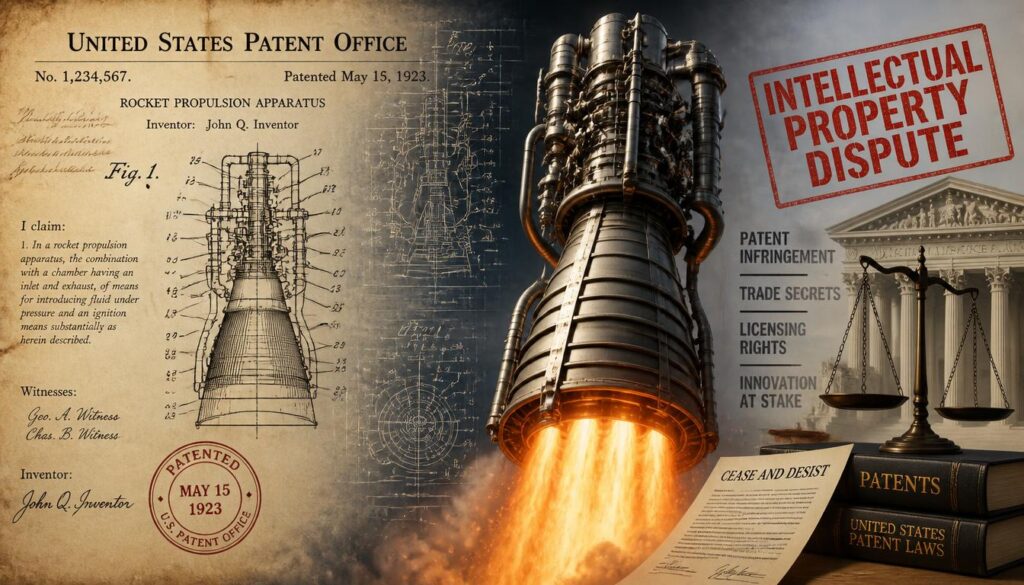
Challenging Patents at the Patent Office
Since 2012, companies in the United States can challenge patents before the Patent Trial and Appeal Board through a process called inter partes review. SpaceX used a similar process to defeat key claims of a Blue Origin patent on sea landings.
Such reviews are often cheaper than court battles.
Europe’s Unified Patent Court
Europe launched its Unified Patent Court in June 2023, allowing a single case to cover many European countries.
This could make enforcing patents in Europe more efficient.
Trade Secrets Instead of Patents
Some companies avoid patents entirely, relying on trade secrets. Elon Musk has said SpaceX avoids patents to keep designs from competitors.
Trade secret disputes often involve departing employees.
Cross-Licensing Deals
Companies sometimes settle disputes by agreeing to license each other’s patents. This avoids costly litigation.
Large firms with big portfolios often use cross-licensing.
Burden on Small Companies
Litigation is expensive, and small companies may struggle to defend themselves. Some settle even when they believe they would win.
Insurance for patent disputes is available but costly.
Rising Filings in China
Chinese companies and institutions have rapidly increased patent filings in space technologies.
International disputes may grow as Chinese firms expand abroad.
Litigation and Innovation
Some experts argue that frequent patent litigation can slow innovation by diverting money to legal fees and discouraging startups. Others say strong patent protection encourages investment by rewarding inventors. The space industry’s relatively low level of patent litigation compared with consumer electronics may reflect its reliance on trade secrets and government contracts.
As commercial markets grow, patent activity is likely to increase.
Government Rights in Patents
When inventions are made under government contracts, governments often receive rights to use them, affecting how patents can be enforced.
Future Trends
As direct-to-device and constellation markets grow, patent disputes in these areas are expected to increase.
Patent Pools
Patent pools could simplify licensing for satellite technologies.
Insurance Against Litigation
Some companies buy insurance covering patent litigation costs to reduce financial risk.
Legal Costs
Legal budgets are growing at space companies with larger patent portfolios.
Global Filings
Filings are rising worldwide.
Patents on Reusable Rocket Technology
As reusable rockets became commercially important, companies filed patents on landing techniques, grid fins, recovery ships and refurbishment methods. The Blue Origin sea landing patent challenge showed how such patents can be contested when prior ideas exist. Many landing concepts had been discussed for decades, making broad patents difficult to defend.
Companies now tend to patent specific implementations rather than general ideas.
Satellite Antenna Patents
Phased array antennas for satellite terminals are a growing area of patent activity, as companies compete to make cheaper, better terminals.
Licensing Revenue
Some companies earn significant revenue by licensing patents rather than making products, especially in communication technology.
What This Means for Innovation Pace
Some industry observers have raised concerns that the increasing prevalence of patent litigation could eventually slow the pace of engineering innovation within the space sector if companies become more cautious about pursuing new technical approaches out of fear of triggering infringement claims, though others argue that robust patent protection is necessary to ensure companies can recoup the substantial research and development investment required for genuine aerospace innovation.
Keep exploring with our guides to space industry patent disputes, space industry patent portfolio valuation and orbital slot allocation disputes. For official information, visit NASA’s official site.
Frequently Asked Questions
Why is patent litigation increasing in the space industry?
As more well-funded companies compete for the same contracts, overlapping innovation areas have led to more intellectual property disputes.
What technology areas see the most patent disputes?
Reusable rocket landing systems, satellite deployment mechanisms, propulsion designs, and software used in satellite operations.
Why is aerospace patent litigation particularly complex?
Engineering solutions often converge due to physics constraints, making it hard to distinguish independent development from actual infringement.
How does litigation affect smaller space companies?
Well-funded competitors can use litigation as leverage against smaller rivals who may lack resources for an extended legal defense.
How are many space patent disputes ultimately resolved?
Through negotiated cross-licensing agreements that allow both parties to continue operating without prolonged legal expense.