Exciting: NASA’s Mobile Launcher Moves Forward as Artemis III Preparations Begin in 2026

Exciting: NASA’s Mobile Launcher Moves Forward as Artemis III Preparations Begin
NASA has officially begun another major step toward returning humans to the Moon by moving its massive mobile launcher back to the Vehicle Assembly Building (VAB) at Kennedy Space Center in Florida. Following the successful completion of the Artemis II mission, NASA teams are now turning their full attention toward Artemis III, the highly anticipated mission expected to land astronauts on the Moon.
The relocation of the mobile launcher marks an important step in readying for the next phase of NASA’s Artemis program. Engineers and ground crews are already analyzing data, inspecting equipment, and preparing the launch infrastructure needed for future deep-space missions.
As Artemis III moves closer to launch, NASA continues demonstrating its long-term commitment to lunar exploration and future human missions beyond Earth orbit.
Artemis III Preparations Officially Begin
Following the conclusion of the historic Artemis II mission, NASA teams immediately shifted focus toward the next mission in the Artemis program.
Artemis III is expected to become one of the most important space missions of the century because it aims to return astronauts to the lunar surface for the first time since the Apollo era.
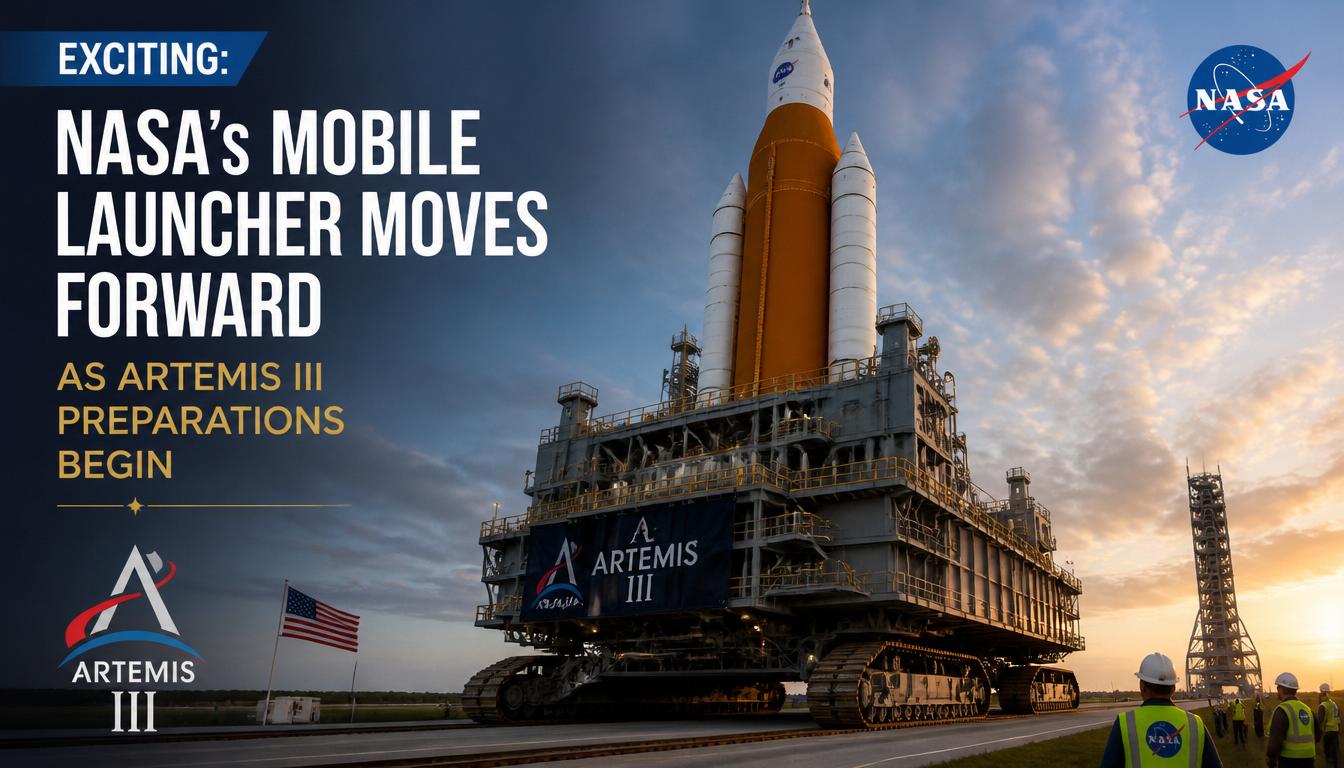
To support this mission, NASA initiated the relocation of Mobile Launcher 1 from Launch Complex 39B back to the Vehicle Assembly Building at Kennedy Space Center.
This move marks the beginning of new rocket stacking operations and launch system preparations for Artemis III.
NASA engineers view the mobile launcher as a critical piece of ground support equipment, since it acts as the main platform for assembling, supporting, and launching the Space Launch System (SLS) rocket.
What Is NASA’s Mobile Launcher?
NASA’s mobile launcher is a giant launch support structure designed specifically for Artemis missions.
The launcher supports the SLS rocket during:
- assembly
- transportation
- countdown operations
- launch activities
Standing hundreds of feet tall, the mobile launcher contains:
- umbilical systems
- elevators
- communication systems
- fueling connections
- power systems
- crew access equipment
It essentially functions as a mobile launch tower that travels between the Vehicle Assembly Building and Launch Pad 39B.
Without the mobile launcher, NASA would not be able to safely prepare and launch Artemis missions.
The structure is designed to withstand extreme heat, vibration, pressure, and acoustic energy generated during rocket ignition.
The journey from Launch Pad 39B back to the Vehicle Assembly Building.
On April 16, 2026, the mobile launcher started its roughly four-mile trek from Launch Pad 39B to the Vehicle Assembly Building.
The enormous structure traveled atop NASA’s crawler-transporter 2, a giant tracked vehicle designed to move heavy launch equipment across Kennedy Space Center.
The move officially began at 8:11 a.m. EDT.
Although the distance may appear short, transporting the launcher is a slow and carefully controlled process because of the massive size and weight of the structure.
The crawler-transporter moves at very low speeds to ensure stability and protect sensitive systems during transport.
NASA teams continuously monitor:
- structural stability
- vibration levels
- weather conditions
- equipment performance
throughout the relocation operation.
Artemis II Success Cleared the Way for Artemis III
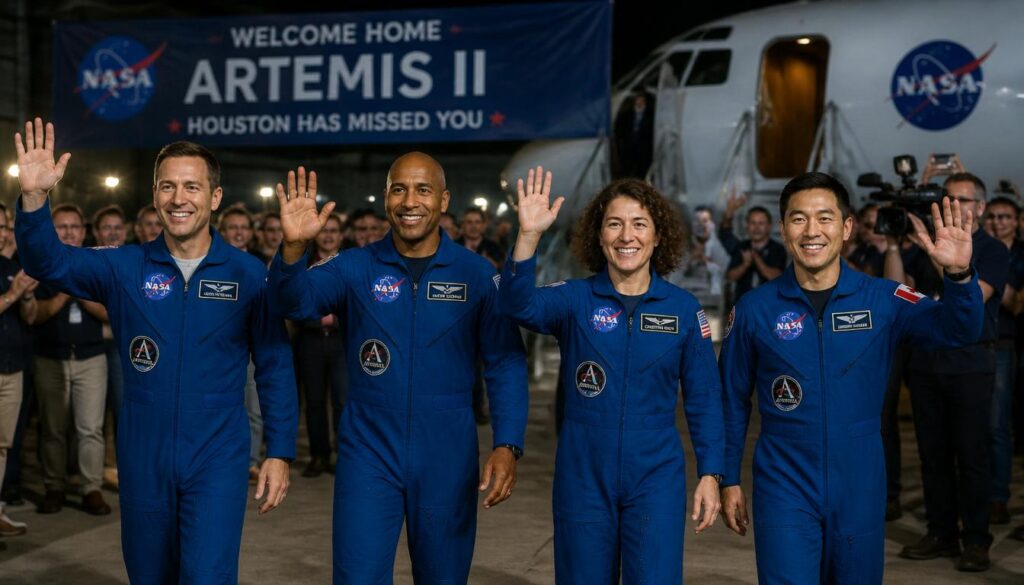
The launcher’s relocation occurs just weeks after Artemis II finished its successful round-trip journey around the Moon and back to Earth.
Artemis II carried:
- Reid Wiseman
- Victor Glover
- Christina Koch
- Jeremy Hansen
on a record-setting lunar flyby mission.
The success of Artemis II proved that NASA’s Orion spacecraft, Space Launch System rocket, and ground systems are capable of supporting human deep-space missions.
Now, the lessons learned from Artemis II are being applied directly to Artemis III preparations.
NASA engineers are analyzing data collected during launch, flight, re-entry, and recovery operations to improve future mission performance and safety.
Inspections and Repairs Begin After Artemis II Launch
Once the mobile launcher returns to the Vehicle Assembly Building, NASA teams will begin extensive inspections, repairs, and system evaluations.
Although the launch infrastructure performed well during Artemis II, some components experienced wear and damage caused by the enormous forces generated during rocket ignition.
NASA reported that teams will focus on:
- flame hole panels
- elevators
- pneumatic systems
- umbilicals
- structural support areas
These systems are exposed to intense heat, pressure, vibration, and exhaust gases during launch operations.
Repairing and reinforcing these components helps ensure the launch system remains safe and reliable for future missions.
Artemis I Lessons Helped Reduce Damage
NASA officials stated that lessons learned from Artemis I played a major role in minimizing damage during the Artemis II launch.
After Artemis I, engineers implemented several upgrades designed to strengthen and protect launch infrastructure.
These improvements included:
- reinforced support structures
- hardened ground equipment
- upgraded flame protection systems
- improved thermal resistance materials
As a result, the mobile launcher and launch pad sustained only minimal damage during Artemis II despite experiencing approximately 8.8 million pounds of thrust during booster ignition.
This result shows how NASA keeps advancing its launch systems through testing, engineering assessments, and mission experience.
The Power of the Space Launch System Rocket
One reason the mobile launcher experiences such intense stress is because of the incredible power produced by NASA’s Space Launch System rocket.
The SLS rocket is currently the most powerful rocket ever built for human exploration missions.
At launch, the rocket generates:
- extreme heat
- shock waves
- acoustic pressure
- massive vibration forces
The twin solid rocket boosters alone generate millions of pounds of thrust.
Ground systems must be engineered carefully to survive these conditions while continuing to support safe launch operations.
The successful performance of the mobile launcher during Artemis II proved that NASA’s launch infrastructure is becoming increasingly capable of handling repeated deep-space missions.
Vehicle Assembly Building Plays a Critical Role
The VAB, as the Vehicle Assembly Building is commonly called, ranks as one of the most well-known landmarks at Kennedy Space Center.
This giant facility is where NASA assembles and prepares rockets before launch.
Inside the VAB:
- rocket stages are stacked
- boosters are attached
- Orion spacecraft are integrated
- system testing is performed
The mobile launcher will now return to this building so engineers can begin preparations for Artemis III rocket assembly operations.
The VAB has supported numerous historic missions, including:
- Apollo missions
- Space Shuttle launches
- Artemis missions
It remains one of NASA’s most important facilities for human spaceflight.
Ground Teams Continue Around-the-Clock Operations
NASA ground crews continue working long hours to prepare systems for Artemis III.
The mobile launcher’s movement operation includes carefully planned work schedules to ensure crew safety and operational efficiency.
NASA stated that operations would temporarily pause to allow ground teams to rest before resuming the journey to the Vehicle Assembly Building.
Large-scale operations like this require coordination between:
- engineers
- transportation specialists
- launch controllers
- safety officers
- technicians
- structural experts
Every movement and inspection must be carefully managed because of the size and complexity of the launch systems involved.
Artemis III Could Return Humans to the Moon
Artemis III is expected to become the first mission of the Artemis program to land astronauts on the lunar surface.
NASA plans for the mission to:
- carry astronauts to lunar orbit
- perform Moon landing operations
- support surface exploration
- test new technologies for long-term lunar presence
The mission is considered a major step toward establishing sustainable human exploration of the Moon.
NASA also hopes Artemis missions will eventually help prepare humanity for future missions to Mars.
The success of Artemis III depends heavily on the readiness of launch infrastructure like the mobile launcher and Vehicle Assembly Building.
Importance of Ground Infrastructure in Space Exploration
While rockets and spacecraft often receive the most attention, ground systems are equally important in human spaceflight.
Launch towers, crawler transporters, communication systems, fueling equipment, and assembly facilities all play essential roles in mission success.
Without reliable infrastructure:
- rockets cannot launch safely
- astronauts cannot board spacecraft securely
- fueling operations cannot occur properly
- mission systems cannot be tested effectively
The relocation of NASA’s mobile launcher underscores the immense level of preparation needed prior to each deep-space mission.
Space exploration depends not only on astronauts and spacecraft, but also on thousands of engineers and technicians working behind the scenes.
Artemis Program Continues Building the Future of Spaceflight
The Artemis program represents NASA’s long-term vision for human exploration beyond Earth orbit.
Its goals include:
- returning humans to the Moon
- establishing sustainable lunar exploration
- building lunar infrastructure
- preparing for Mars missions
Each Artemis mission builds upon the achievements of previous flights.
Artemis I tested the systems with no crew on board, Artemis II flew astronauts around the Moon, and Artemis III intends to return humans to the lunar surface.
The movement of the mobile launcher is another reminder that NASA’s next giant leap is already underway.
Frequently Asked Questions (FAQs)
What is NASA’s mobile launcher?
It is a giant launch support tower used to assemble, support, and launch Artemis rockets.
Why was the mobile launcher moved?
NASA moved it back to the Vehicle Assembly Building to begin preparations for Artemis III.
What is Artemis III?
NASA’s upcoming Artemis III mission aims to send astronauts back to the lunar surface.
How far did the mobile launcher travel?
The launcher traveled approximately four miles from Launch Pad 39B to the VAB.
What vehicle moved the launcher?
NASA’s crawler-transporter 2 carried the mobile launcher.
Why are repairs needed after Artemis II?
Launch operations generate extreme heat, vibration, and pressure that can damage infrastructure components.
What damage did NASA inspect?
Teams are inspecting flame hole panels, elevators, pneumatic systems, and umbilicals.
What is the Vehicle Assembly Building?
The VAB is NASA’s facility where rockets are assembled and prepared for launch.
How powerful is the SLS rocket?
The Space Launch System produces approximately 8.8 million pounds of thrust at launch.
Why is Artemis III important?
It aims to return humans to the Moon and support future long-term lunar exploration missions.