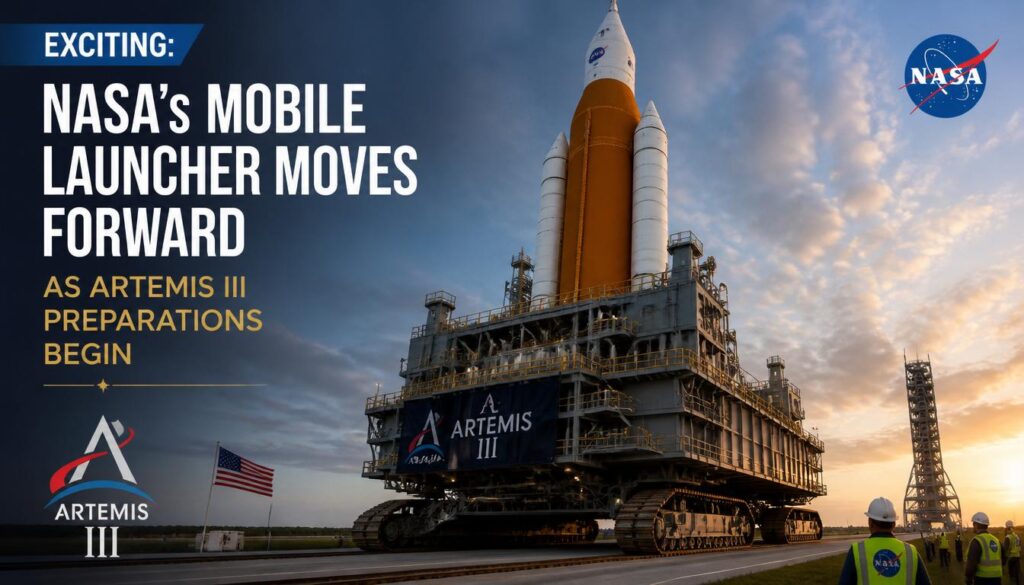
Promising: NASA’s Main Artemis Rocket Stage Reaches Kennedy Space Center for the Artemis III Mission in 2026

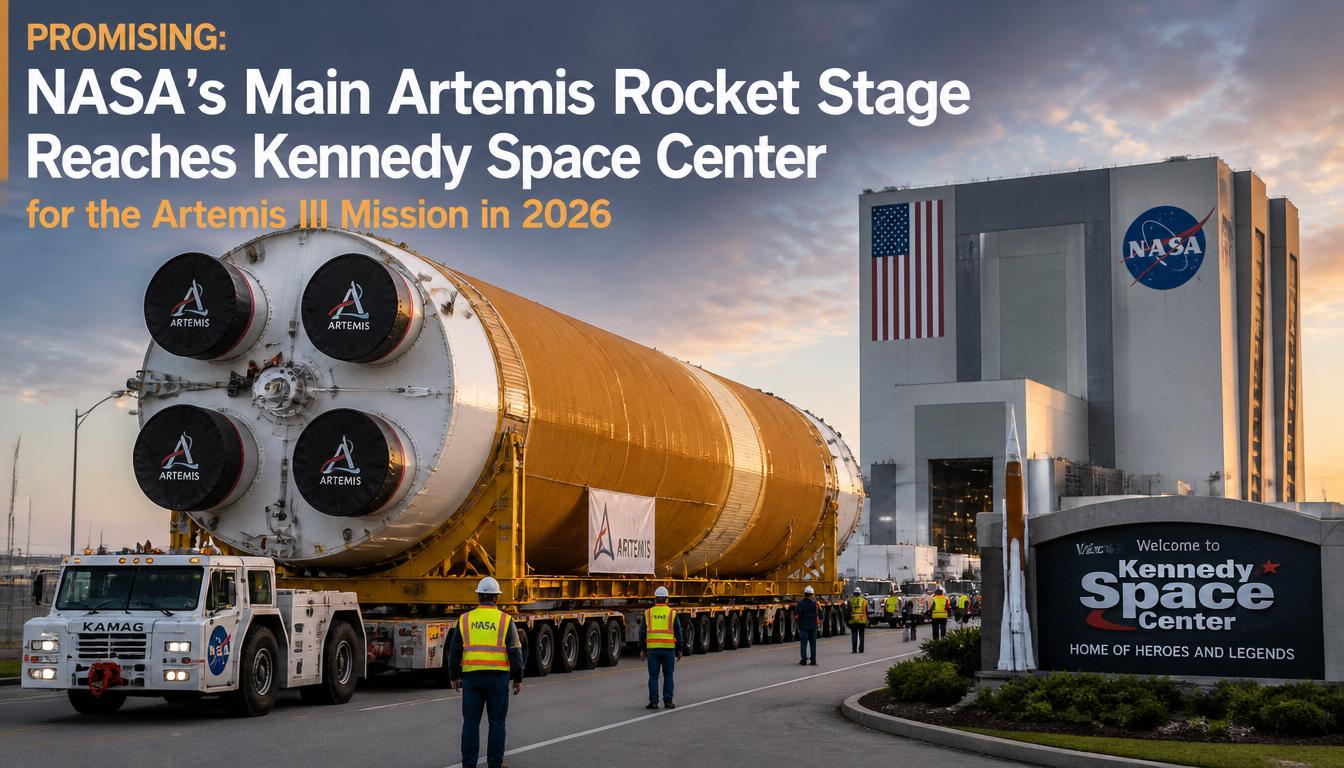
Promising: NASA’s Main Artemis Rocket Stage Reaches Kennedy Space Center for the Artemis III Mission in 2026
NASA has reached another major milestone in its Artemis program as the massive core stage for the Artemis III mission officially arrived at Kennedy Space Center on April 27, 2026. The enormous rocket section traveled approximately 900 miles aboard NASA’s Pegasus barge from the agency’s Michoud Assembly Facility in New Orleans to Florida.
The arrival of the Space Launch System core stage marks an important step toward preparing the Artemis III mission, which aims to help NASA advance human exploration of the Moon. Engineers and technicians will now begin the complicated process of assembling and integrating the rocket components inside the famous Vehicle Assembly Building.
The Massive Journey of NASA’s Core Stage
Transporting one of the largest rocket components ever built is not a simple task. NASA used its specially designed Pegasus barge to move the upper portion of the SLS core stage safely across waterways from Louisiana to Florida.
The journey covered nearly 900 miles and required careful planning to protect the delicate rocket hardware during transportation. The core stage traveled from Michoud Assembly Facility, where NASA manufactures and assembles large rocket structures for Artemis missions.
When the Pegasus barge finally arrived at Kennedy Space Center’s turn basin wharf, it marked the successful completion of another major logistical operation for the Artemis program.
What Is the SLS Core Stage?
The Space Launch System, commonly known as SLS, is NASA’s most powerful rocket developed for deep space exploration. The core stage serves as the central backbone of the giant launch vehicle.
This enormous section measures approximately 212 feet long and contains several important components needed during launch. The top four-fifths of the stage includes:
- The liquid hydrogen tank
- The liquid oxygen tank
- The intertank structure
- The forward skirt
These systems store and manage the propellants needed to power the rocket during launch and help send astronauts beyond Earth orbit.
The core stage works together with four RS-25 engines and solid rocket boosters to generate the massive thrust needed for Artemis missions.
Why Artemis III Is Important
The Artemis III mission is expected to become one of NASA’s most historic lunar missions in decades. The mission will launch astronauts aboard the Orion spacecraft using the Space Launch System rocket.
Unlike earlier Artemis test flights, Artemis III focuses heavily on testing rendezvous and docking technologies needed for future lunar landings. NASA plans to demonstrate how Orion can safely connect with commercial spacecraft systems that may later transport astronauts to the lunar surface.
These tests are essential because future Artemis missions, including Artemis IV, will rely on advanced docking operations in space before astronauts travel to the Moon.
The Core Stage Will Move to the Vehicle Assembly Building
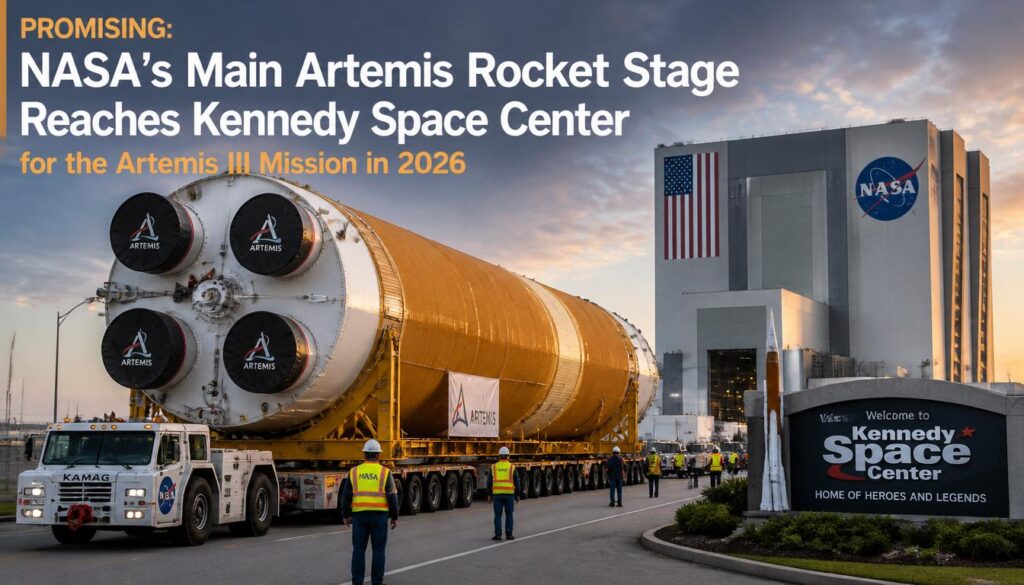
After arriving at Kennedy Space Center, NASA teams prepared to transport the rocket section to the Vehicle Assembly Building, often called the VAB.
The Vehicle Assembly Building is one of the most recognizable structures in space exploration history. Inside the VAB, engineers vertically stack and integrate rocket hardware before launch operations begin.
The newly delivered core stage section will join previously delivered hardware, including the boat-tail and engine section already located inside High Bay 2.
Once combined, technicians will complete outfitting procedures and fully integrate the rocket stage before additional Artemis III preparations continue.
Understanding Vertical Integration
Vertical integration is one of the most important stages in assembling a large rocket like the Space Launch System.
Instead of putting the rocket together horizontally, NASA assembles the parts vertically inside the VAB. This method allows engineers to carefully connect electrical systems, fuel lines, structural hardware, and flight components while ensuring everything remains properly aligned.
The process requires extreme precision because even small alignment errors could affect mission safety and rocket performance.
NASA’s engineering teams spend months carefully checking every connection during this phase.
The Role of the Orion Spacecraft
The Orion spacecraft, NASA’s sophisticated crew capsule built for deep space missions, will be positioned at the top of the SLS rocket.
Orion is built to carry astronauts farther into space than previous spacecraft designed for human missions. The capsule contains advanced navigation systems, communication technology, life-support equipment, and safety systems needed for long-duration missions.
During Artemis III, Orion will help NASA test rendezvous and docking operations with commercial spacecraft systems that could eventually support lunar landing operations.
These tests will help NASA prepare for more advanced Moon missions later in the Artemis program.
NASA’s Pegasus Barge Continues Playing a Critical Role
NASA’s Pegasus barge has become one of the agency’s most important transportation systems for Artemis hardware.
The barge was specially modified to transport larger rocket components required for the Space Launch System program. Because the SLS core stage is too large for standard road transportation, NASA depends on water transport to safely move the hardware between facilities.
Pegasus has transported multiple Artemis rocket stages over the years and continues supporting NASA’s growing lunar exploration efforts.
Without specialized transportation systems like Pegasus, moving such enormous rocket hardware would be nearly impossible.
Preparing for Future Moon Missions
The arrival of the Artemis III core stage represents more than just another transportation milestone. It highlights NASA’s continued progress toward returning humans to the Moon.
NASA hopes Artemis missions will eventually establish a sustainable human presence near the lunar surface. Additionally, the program acts as a proving ground for upcoming missions to Mars and other destinations in deep space.
Every rocket component, transportation operation, and assembly procedure helps NASA improve technologies and gain valuable experience for future exploration missions.
As technicians continue integrating the Artemis III rocket at Kennedy Space Center, excitement continues building around the future of lunar exploration.
NASA’s Long-Term Artemis Vision
The Artemis program is designed to accomplish much more than a single Moon landing mission. NASA plans to use Artemis missions to develop long-term exploration systems, including lunar habitats, advanced spacecraft, and new technologies for deep space travel.
Future Artemis missions may support scientific research near the Moon’s south pole, where scientists believe frozen water may exist beneath the surface.
Water resources could become extremely important for future astronauts because they may help produce drinking water, breathable oxygen, and even rocket fuel.
The success of Artemis III will play a major role in helping NASA move toward these long-term exploration goals.
FAQs
What arrived at Kennedy Space Center for Artemis III?
NASA’s Space Launch System core stage arrived at Kennedy Space Center aboard the Pegasus barge for Artemis III rocket assembly.
How far did the core stage travel?
The rocket stage traveled approximately 900 miles from NASA’s Michoud Assembly Facility in New Orleans to Florida.
What is the Space Launch System?
The Space Launch System, or SLS, is NASA’s heavy-lift rocket designed for deep space exploration missions including Artemis flights to the Moon.
How long is the Artemis III core stage?
The core stage measures approximately 212 feet long.
What does the core stage contain?
The stage includes the liquid hydrogen tank, liquid oxygen tank, intertank, and forward skirt sections.
What is the purpose of Artemis III?
Artemis III will test rendezvous and docking capabilities between Orion and commercial spacecraft needed for future Moon landing missions.
What is the Vehicle Assembly Building?
The Vehicle Assembly Building is NASA’s massive rocket integration facility at Kennedy Space Center where Artemis rockets are assembled vertically.
What is the Pegasus barge?
Pegasus is NASA’s specialized transportation barge used to move large rocket components between manufacturing and launch facilities.
Why is Artemis important for future exploration?
The Artemis program helps NASA develop technologies and experience needed for sustainable Moon exploration and future human missions to Mars.
What spacecraft will astronauts use during Artemis III?
Astronauts will travel aboard the Orion spacecraft launched on top of the Space Launch System rocket.