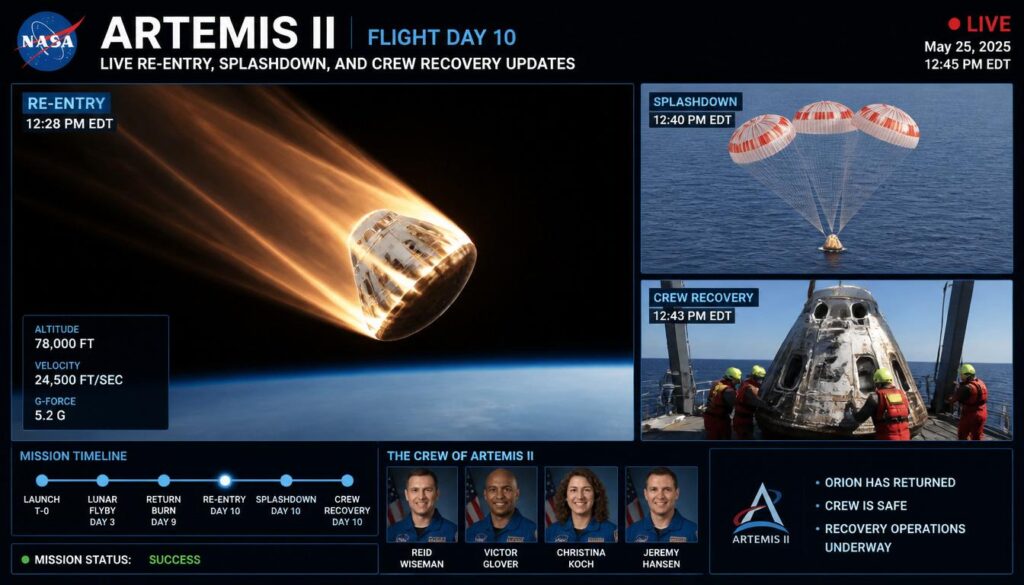
EPIC: Artemis II Astronauts Return to Houston After Historic Moon Mission – Incredible Moments from 2026

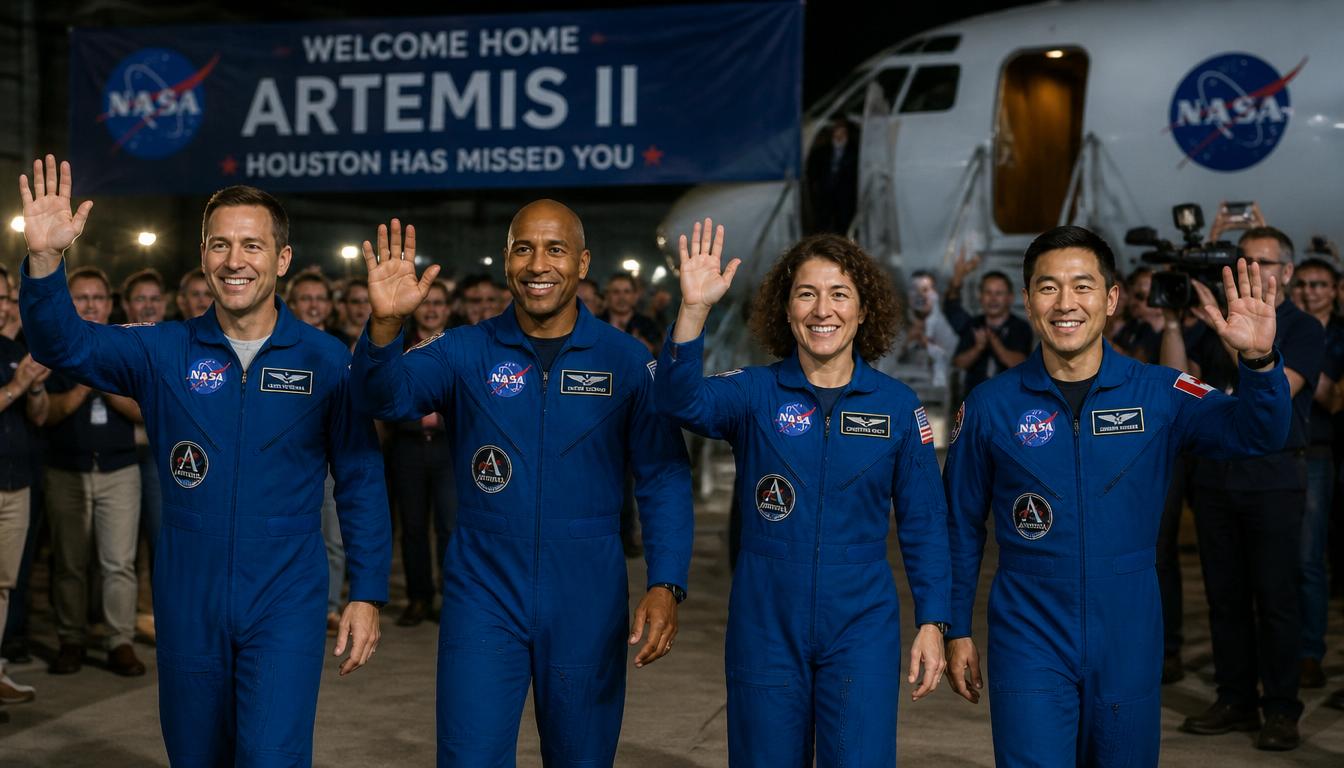
EPIC: Artemis II Astronauts Return to Houston After Historic Moon Mission – Incredible Moments from 2026
NASA’s Artemis II astronauts have officially returned home to Houston after completing one of the most historic space missions of the modern era. Following a successful journey around the Moon and a safe splashdown in the Pacific Ocean, the crew reunited with their families, friends, and colleagues at NASA’s Johnson Space Center.
The Artemis II mission marked the first time humans traveled around the Moon in more than 50 years, opening a new chapter in deep-space exploration. NASA astronauts Reid Wiseman, Victor Glover, Christina Koch, and Canadian Space Agency astronaut Jeremy Hansen spent nearly 10 days aboard the Orion spacecraft, testing critical systems for future lunar missions.
Their safe return represents a major achievement for NASA’s Artemis program and a powerful step toward humanity’s future exploration of the Moon and Mars.
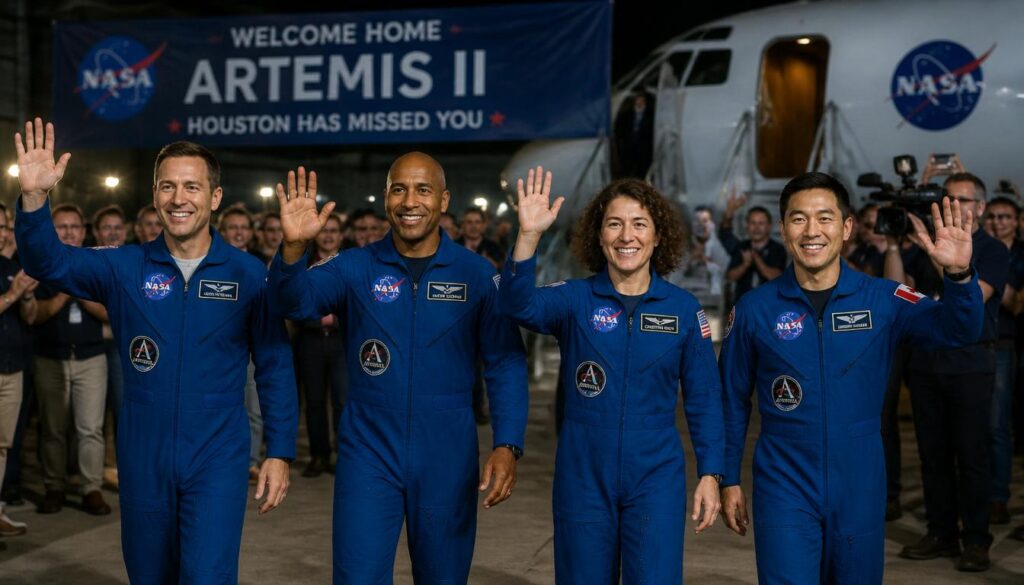
Artemis II Crew Welcomed Back to Houston
After completing their historic lunar flyby mission, the Artemis II crew arrived at NASA’s Johnson Space Center in Houston, Texas, where they received an emotional welcome home ceremony.
The astronauts were greeted by:
- family members
- NASA leadership
- fellow astronauts
- mission teams
- agency employees
The event celebrated the success of Artemis II and honored the dedication of the astronauts and support teams who made the mission possible.
For the crew, returning to Houston marked the end of an extraordinary journey that carried them hundreds of thousands of miles through deep space and safely back to Earth.
The emotional reunion with loved ones became one of the most memorable moments following the mission’s completion.
Artemis II Becomes NASA’s First Crewed Lunar Mission in Decades
Artemis II launched on April 1 from Launch Pad 39B at NASA’s Kennedy Space Center in Florida.
The mission carried the first astronauts to travel toward the Moon since the Apollo era ended in 1972. This achievement alone makes Artemis II one of the most important human spaceflight missions in modern history.
The four-person crew traveled aboard NASA’s Orion spacecraft, launched by the powerful Space Launch System (SLS) rocket.
Unlike Apollo missions, Artemis II focused heavily on testing spacecraft systems, navigation technologies, crew operations, and deep-space flight procedures needed for future long-duration missions.
The mission successfully demonstrated that NASA can once again send astronauts beyond low Earth orbit and safely return them home.
Meet the Artemis II Crew
The Artemis II mission featured a diverse and highly experienced international crew.
The astronauts included:
- Reid Wiseman – Commander
- Victor Glover – Pilot
- Christina Koch – Mission Specialist
- Jeremy Hansen – CSA Mission Specialist
Reid Wiseman served as mission commander, overseeing spacecraft operations and crew coordination throughout the journey.
Victor Glover acted as pilot and played a key role in navigation and spacecraft handling procedures.
Christina Koch contributed to mission operations and scientific objectives while continuing her groundbreaking role in NASA’s human spaceflight program.
Jeremy Hansen represented the Canadian Space Agency, becoming one of the first Canadian astronauts to participate in a lunar mission.
Together, the crew symbolized international cooperation and the future of global space exploration.
Historic Lunar Flyby Sets New Mission Records
During their nearly 10-day mission, the Artemis II crew completed a record-setting journey around the Moon.
At its farthest point from Earth, Orion traveled approximately 252,756 miles away. During the closest lunar approach, the spacecraft passed roughly 4,067 miles above the Moon’s surface.
This flyby allowed astronauts to:
- observe the Moon from close range
- collect operational data
- test Orion’s systems in deep space
- evaluate crew performance during long-duration missions
The mission gave NASA engineers essential data on how the spacecraft performed under the extreme conditions of deep space.
These findings will help improve future Artemis missions, including upcoming lunar landing operations.
Orion Spacecraft Successfully Returns to Earth
After completing the lunar flyby, Orion began its journey back to Earth.
The spacecraft safely splashed down in the Pacific Ocean at 8:07 p.m. on April 10 off the coast of San Diego, California.
The splashdown marked the successful completion of Artemis II’s deep-space mission and proved Orion’s ability to safely transport astronauts to and from lunar distances.
NASA recovery teams, alongside U.S. military personnel, immediately began recovery operations after landing.
These operations included:
- securing the spacecraft
- extracting the astronauts
- transporting the crew to recovery ships
- performing initial medical evaluations
The successful splashdown demonstrated the reliability of Orion’s re-entry systems, heat shield, parachutes, and navigation systems.
Recovery Operations in the Pacific Ocean
Once Orion landed in the Pacific Ocean, NASA and military recovery teams quickly approached the capsule.
The astronauts were safely extracted from the spacecraft and transported to the USS John P. Murtha using military helicopters.
Recovery crews included:
- Navy divers
- medical teams
- engineers
- flight recovery specialists
- NASA support personnel
Inside the recovery vessel, astronauts underwent post-flight medical evaluations to assess how their bodies responded after nearly 10 days in deep space.
These evaluations are extremely important because astronauts experience physical effects from:
- microgravity exposure
- re-entry forces
- long-duration confinement
- radiation exposure
The recovery operation itself is considered one of the most critical phases of any human space mission.
Post-Mission Medical and Human Performance Evaluations
Following their return to Houston, the Artemis II crew began postflight reconditioning and medical analysis.
NASA scientists and medical specialists now study:
- muscle recovery
- cardiovascular response
- balance and coordination
- fatigue levels
- psychological performance
Spaceflight affects the human body in many ways, especially during missions beyond Earth orbit.
The data collected from Artemis II will help NASA improve astronaut safety and prepare crews for future missions to the Moon and Mars.
Astronauts will also participate in human performance studies that analyze how deep-space travel affects cognition, movement, endurance, and recovery.
These findings are essential for planning future long-duration exploration missions.
Lunar Science Debriefs and Mission Analysis
In addition to medical evaluations, the crew will take part in extensive lunar science debriefings.
These sessions allow astronauts to:
- review mission events
- discuss spacecraft operations
- analyze navigation procedures
- evaluate onboard systems
- share observations from lunar flyby operations
Mission teams use this information to improve future Artemis missions and refine deep-space operational strategies.
NASA engineers will also inspect Orion itself, studying:
- heat shield performance
- propulsion systems
- structural integrity
- communication systems
- onboard instrumentation
Every part of Artemis II provides valuable lessons for the future of space exploration.
Artemis II Opens a New Era of Lunar Exploration
The success of Artemis II is more than just a completed mission—it represents the beginning of a new era in human spaceflight.
NASA’s Artemis program aims to:
- return astronauts to the Moon
- establish long-term lunar exploration
- build sustainable Moon infrastructure
- prepare for human missions to Mars
Artemis II served as the program’s first crewed test flight, demonstrating that the Orion and SLS can safely transport humans into deep space.
The mission’s success now paves the way for future lunar landing missions, including Artemis III.
For millions of people around the world, Artemis II reignited excitement about space exploration and humanity’s future beyond Earth.
International Cooperation Strengthens the Artemis Program
One of the defining features of Artemis II was international collaboration.
The inclusion of Canadian astronaut Jeremy Hansen highlights the growing partnerships between NASA and global space agencies.
Future Artemis missions are expected to involve contributions from:
- Canada
- Europe
- Japan
- other international partners
This collaborative approach helps:
- share scientific knowledge
- reduce mission costs
- strengthen technological innovation
- promote peaceful space exploration
The success of Artemis II demonstrates what countries can achieve when working together toward common exploration goals.
The Legacy of Artemis II
Artemis II will be remembered as one of the most important missions in modern space history.
The mission:
- returned humans to lunar space
- validated next-generation spacecraft systems
- advanced deep-space exploration technologies
- inspired future generations worldwide
From launch to splashdown, the mission showcased human determination, engineering excellence, and international teamwork.
As the crew settles back into life on Earth, NASA continues preparing for the next phase of the Artemis program and humanity’s continued journey into deep space.
Frequently Asked Questions (FAQs)
What was the Artemis II mission?
Under the Artemis program, Artemis II marked NASA’s first lunar mission with astronauts aboard.
Who were the Artemis II astronauts?
The astronauts on board were Reid Wiseman, Victor Glover, Christina Koch, and Jeremy Hansen.
When did Artemis II launch?
The mission launched on April 1 from Kennedy Space Center in Florida.
How long was the Artemis II mission?
The mission lasted nearly 10 days.
How far did Orion travel from Earth?
At its farthest point, Orion traveled approximately 252,756 miles from Earth.
How close did the spacecraft come to the Moon?
Orion came within about 4,067 miles of the lunar surface.
Where did Orion splash down?
The spacecraft splashed down in the Pacific Ocean near San Diego, California.
What happens after astronauts return from space?
Astronauts undergo medical evaluations, physical recovery programs, and mission debriefings.
Why is Artemis II important?
It marks humanity’s return to lunar space and prepares NASA for future Moon and Mars missions.
What is NASA’s Artemis program?
The Artemis program is NASA’s initiative to return humans to the Moon and develop future deep-space exploration capabilities.